How Music Heals the Mind

Understanding the Power of Music
Music is more than entertainment — it’s a therapeutic force. For individuals with mental health disorders such as depression, anxiety, PTSD, or schizophrenia, music can offer emotional regulation, cognitive stimulation, and even physiological healing.
The Brain on Music
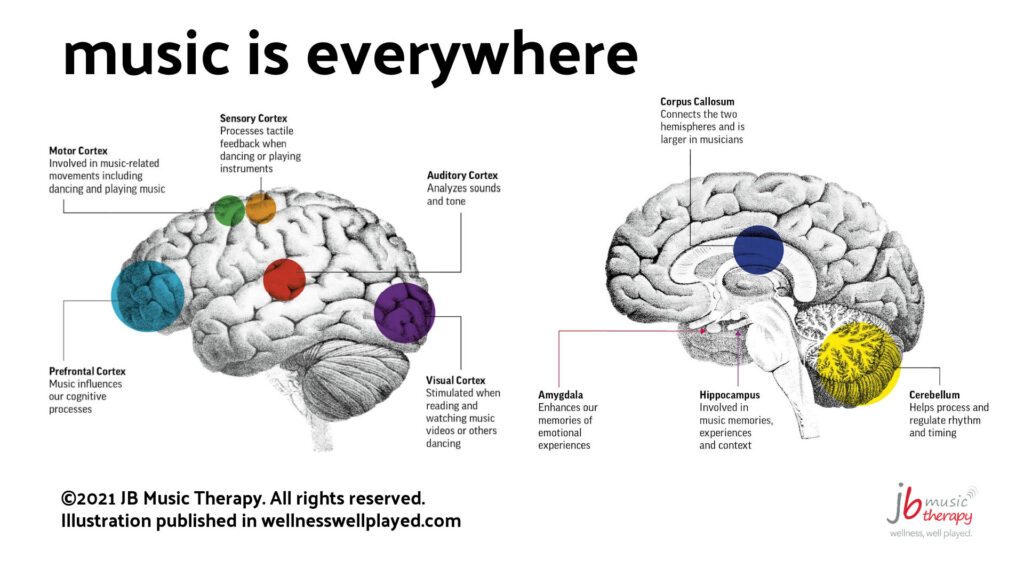
When we listen to music, the brain releases dopamine — the “feel-good” neurotransmitter — especially during emotionally powerful moments. Music also activates the amygdala (emotion), hippocampus (memory), and prefrontal cortex (decision-making).
In therapy, rhythm can regulate heartbeat and breathing, melody can reduce cortisol (stress hormone), and lyrics can help process trauma. Music therapy has been shown to improve mood, reduce anxiety, and even enhance neuroplasticity — the brain’s ability to rewire itself.
Music as a Healing Tool
- Calming rhythms help regulate anxiety and panic attacks.
- Uplifting melodies can counteract depressive thoughts.
- Group music-making fosters social connection and reduces isolation.
- Improvisation in music therapy helps express emotions that are hard to verbalize.
Take Note
Music is not a cure-all, but it’s a powerful complement to therapy and medication. Whether through guided music therapy or personal playlists, sound can be a bridge to healing.
Explore more from the American Psychiatric Association.